
Case Study: SAP Calculations for a Low-Energy Residential Infill Development
Project Overview
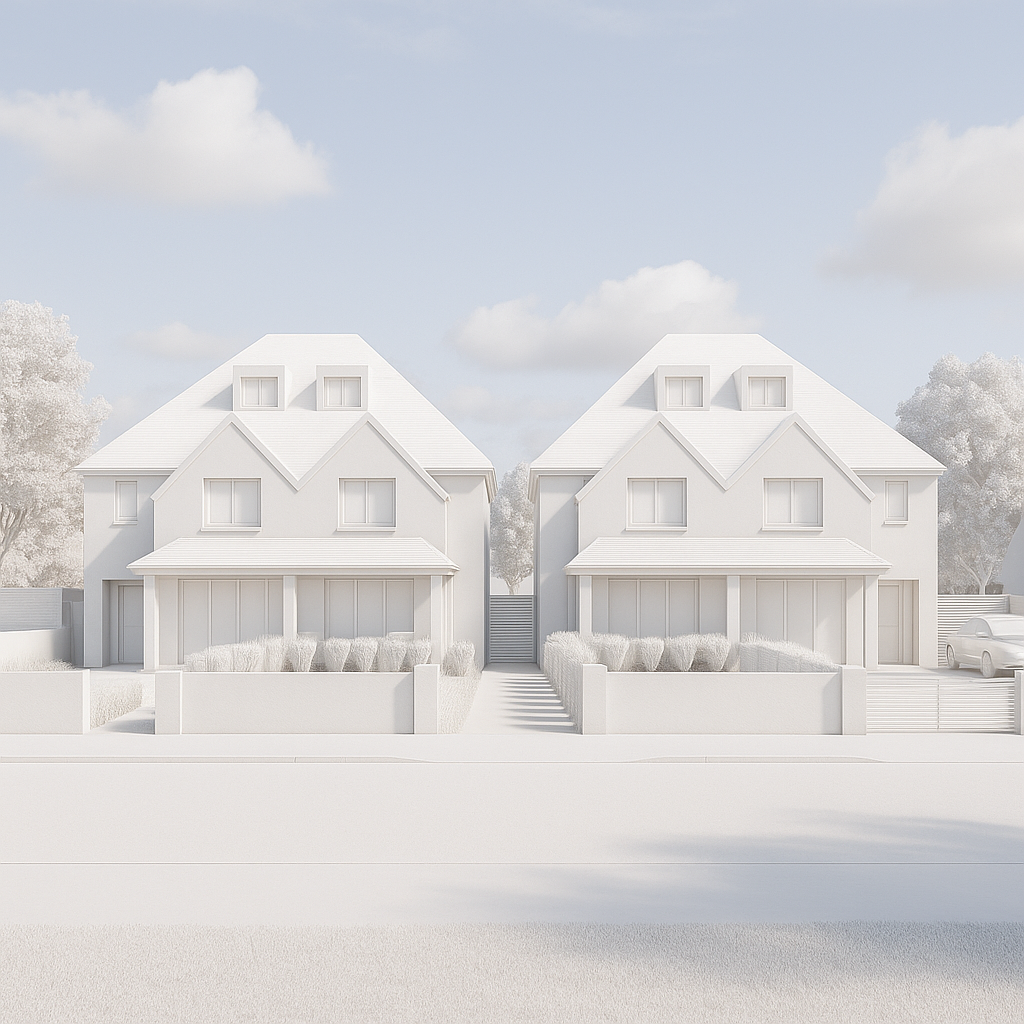
This project involves the construction of four new-build, three-storey terraced homes designed to meet modern space, amenity, and energy performance standards. Located on a constrained urban site, the development carefully balances internal floor areas, external amenity space, and energy efficiency targets. Vision Energy was appointed to deliver full SAP Calculations to support Building Regulations compliance under Part L 2021.
Design & Layout
Each dwelling accommodates a 5-bedroom, 8-person household, spread over ground, first, and second floors. Internal floor areas range from 179 m² to 194 m². The site layout includes private rear gardens, cycle and bin storage, and EV-ready parking. All homes exceed required private amenity space standards, each offering over 100 m² of outdoor space.
Energy Performance Strategy
A fabric-first approach was adopted across all four dwellings, with a focus on minimising heat loss and reducing operational carbon through efficient materials and systems. Key specification highlights include:
- Walls: 0.18 W/m²K
- Roof: 0.13 W/m²K
- Floor: 0.15 W/m²K
- Glazing: 1.2 W/m²K, low G-value for solar gain control
- Air permeability target: 5 m³/h·m² at 50Pa
- MVHR systems specified to reduce heating demand and support internal air quality
SAP Calculations – Results Snapshot (Typical Unit)
| Metric | Result |
|---|---|
| SAP Rating | 86 B |
| DER (Dwelling Emission Rate) | 11.14 kgCO₂/m²/year |
| TER (Target Emission Rate) | 12.53 kgCO₂/m²/year |
| CO₂ Reduction vs TER | 34.4% |
| DFEE (Fabric Energy Efficiency) | 42.1 kWh/m²/year |
| DPER (Primary Energy Rate) | 73.2 kWh/m²/year |
Low Carbon & Renewable Features
- Each home integrates a roof-mounted solar PV system (~1.3 kWp), contributing to on-site energy generation and offsetting regulated emissions.
- No gas connection is proposed – space and water heating are provided by efficient electric systems.
- Design meets the 31% CO₂ reduction target in line with Part L 2021 requirements for new dwellings.
Additional Site Features
- High-spec thermal envelope and airtightness contribute to reduced energy demand.
- Secure cycle storage, bin stores, and soft landscaping integrated into the overall layout.
- Orientation and glazing design mitigate summer overheating risk while maximising daylight.
Outcome
Through detailed SAP Calculations and a coordinated design approach, this development demonstrates how compact infill sites can deliver high-performing, policy-compliant family homes. Vision Energy’s input ensured that all regulatory performance criteria were met while supporting a low-carbon, future-ready design.