
Navigating Part O: Lessons From Thermal Modelling a Glazed Residential Design
Part O has changed the way residential projects are being designed, particularly where schemes rely on large areas of glazing and natural ventilation.
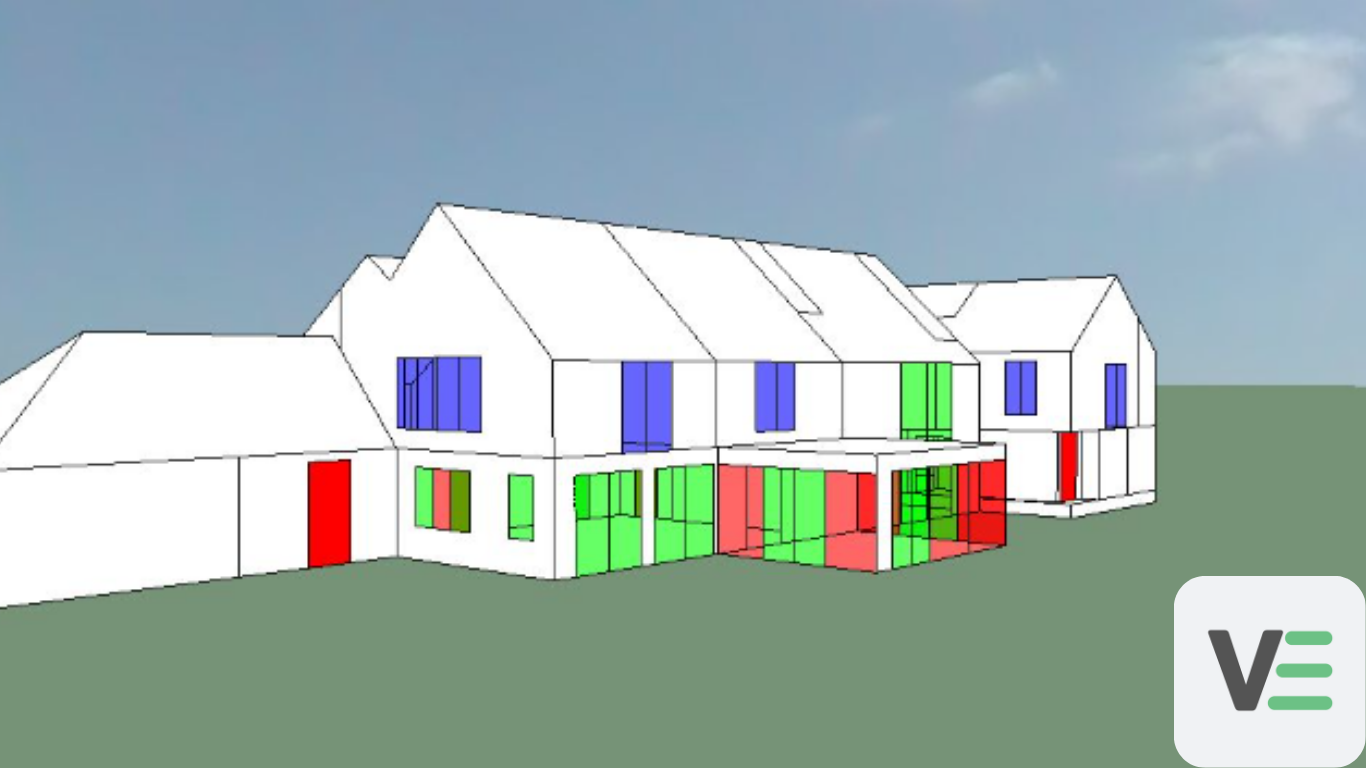
We recently carried out dynamic thermal modelling on a single dwelling using IES VE as the design developed through technical stages. The house included a large amount of glazing across the rear elevation, especially at ground floor level where the layout was designed around daylight and the connection to the garden.
From an architectural point of view, none of this was unusual. A lot of modern residential projects are heading in this direction. The challenge was making sure the ventilation strategy still worked properly once realistic opening restrictions started being introduced into the design.
Part O and Part K Are Easy To Mix Up
One thing we see quite regularly is Part K assumptions being carried across into Part O discussions.
Under Part K, many designers are familiar with the 800mm threshold linked to protection from falling. Under Part O, the requirements can change if the window is being used as part of the purge ventilation strategy.
If an opening extends beyond 100mm and there is a significant drop externally, guarding may need to extend to 1100mm above finished floor level.
That sounds like a relatively small detail, but it can have quite a noticeable impact on overheating calculations once the opening areas are adjusted properly within the model.
On this project, the larger glazed rooms became much more sensitive once the realistic opening restrictions were introduced. The original ventilation strategy still worked, but there was far less margin within the results than there appeared to be initially.
Usually it is not one major issue causing the problem. It is several smaller decisions gradually reducing how effective the ventilation strategy actually is.
Opening Restrictions Can Change The Results Very Quickly
One thing Part O has highlighted quite clearly is how sensitive overheating calculations are to window opening assumptions.
A room can look absolutely fine with unrestricted openings, then become borderline once restrictors are applied. That happened fairly quickly on this project.
Some of the rear facing rooms initially performed reasonably comfortably within the model. Once the opening sizes were reduced to reflect more realistic conditions, temperatures started increasing noticeably during warmer periods, particularly where the model was relying on night purge ventilation to cool the spaces back down.
This is often where there can be a disconnect between the early design assumptions and how the building will actually operate once occupied.
Windows are not always opened fully overnight. Restrictors get added during technical design. Openings adjacent to accessible roofs become more complicated than originally expected.
Those changes sound minor individually, but they can shift the overheating results surprisingly quickly.
Accessible Roof Areas Added More Complexity Than Expected
The upper level roof areas also started affecting the ventilation strategy earlier than expected.
Some of the openings near the roof spaces formed an important part of the purge strategy within the original model. Once the roof accessibility and guarding arrangements were reviewed in more detail, the opening assumptions had to be revised and the impact on ventilation performance became fairly obvious quite quickly.
Again, none of the individual changes were especially dramatic on their own. The issue was more the cumulative effect across the building once several small restrictions were combined together.
This is where dynamic thermal modelling becomes particularly useful because these interactions are difficult to identify properly through simplified calculations alone.
Large Glazed Elevations Can Still Work Under Part O
There is sometimes a perception now that Part O means residential schemes need to move toward much smaller windows and more defensive façade designs.
In reality, large glazed elevations can still work perfectly well under Part O, but the glazing, ventilation strategy and solar gains all need to be considered together much earlier in the design process.
On this project, the glazing itself was not unreasonable in the context of the architecture. The issue was more how sensitive some of the spaces became once solar gains and restricted ventilation were combined together.
Interestingly, some fairly modest changes to the opening arrangements improved the results far more effectively than simply reducing glazing area across the façade.
There is also now a much closer relationship between overheating mitigation and Part L performance than there used to be. Some of the options that improved summertime comfort within the model also started affecting winter energy performance once the wider energy calculations were reviewed.
That balance is becoming a much bigger part of residential design generally.
The Biggest Value Usually Comes Earlier In The Design Process
One thing that has become increasingly clear across Part O work is that the modelling itself is often more valuable than the final compliance report.
On this project, the modelling helped identify which rooms were most sensitive to solar gains, where opening restrictions would start becoming problematic and how heavily parts of the house were relying on night purge ventilation to maintain acceptable comfort conditions.
More importantly, it allowed those issues to be identified early enough that the design could still evolve around them before the technical layout became fixed.
That is usually where the biggest value sits with Part O modelling.